October 18, 2026
A car breakdown can happen with little warning, whether you are traveling on a busy highway, driving through a quiet neighborhood or heading home after work. In the first few minutes, it is easy to panic or focus immediately on figuring out what went wrong with the vehicle. However, your first priority should be protecting yourself, your passengers and other people on the road.
According to Malman Law, approximately 6 million car accidents occur every year in the United States, averaging about 16,500 accidents each day. A disabled vehicle can create an additional hazard when it is stopped in or near moving traffic, so taking appropriate precautions is important. The following steps can help you respond calmly and safely during the first five minutes after your car breaks down.
How Do I Ensure My Safety and That of My Passengers?
As soon as you realize something is wrong, focus on controlling the vehicle and getting to a safe position. If you notice warning signs such as loss of power, unusual noises, smoke or a warning light, avoid making sudden maneuvers. Turn on your hazard lights to alert other drivers that your vehicle may be experiencing a problem.
If the vehicle is still moving, gradually reduce your speed and look for a safe place to stop. Depending on your surroundings, this could be a wide shoulder, parking lot, rest area or another location away from active traffic lanes. Avoid stopping around blind curves, the crest of a hill or other areas where approaching drivers may have difficulty seeing you.
Once the vehicle has stopped, assess your surroundings before deciding whether you and your passengers should get out. If you are safely off the roadway, remaining inside the locked vehicle may be appropriate while you wait for assistance. If you are stopped in an active traffic lane and cannot move the vehicle, leaving the car may sometimes be safer, but only when you can reach a location away from traffic without putting yourself in greater danger.
Keep children and other passengers together and away from moving vehicles. Do not attempt roadside repairs if doing so would require standing close to traffic or crawling underneath the vehicle.
Where Should I Move My Vehicle?
If the vehicle can still be driven safely, moving it away from traffic should generally be a priority. Even traveling a short distance to reach a shoulder or nearby parking area can substantially reduce the risk created by a disabled vehicle.
However, you should not attempt to drive a vehicle if doing so could cause an accident or make the mechanical problem worse. For example, a vehicle with severely reduced braking ability, steering problems or significant smoke may not be safe to operate. In those situations, keep the vehicle stopped and concentrate on making the area around it as safe as possible.
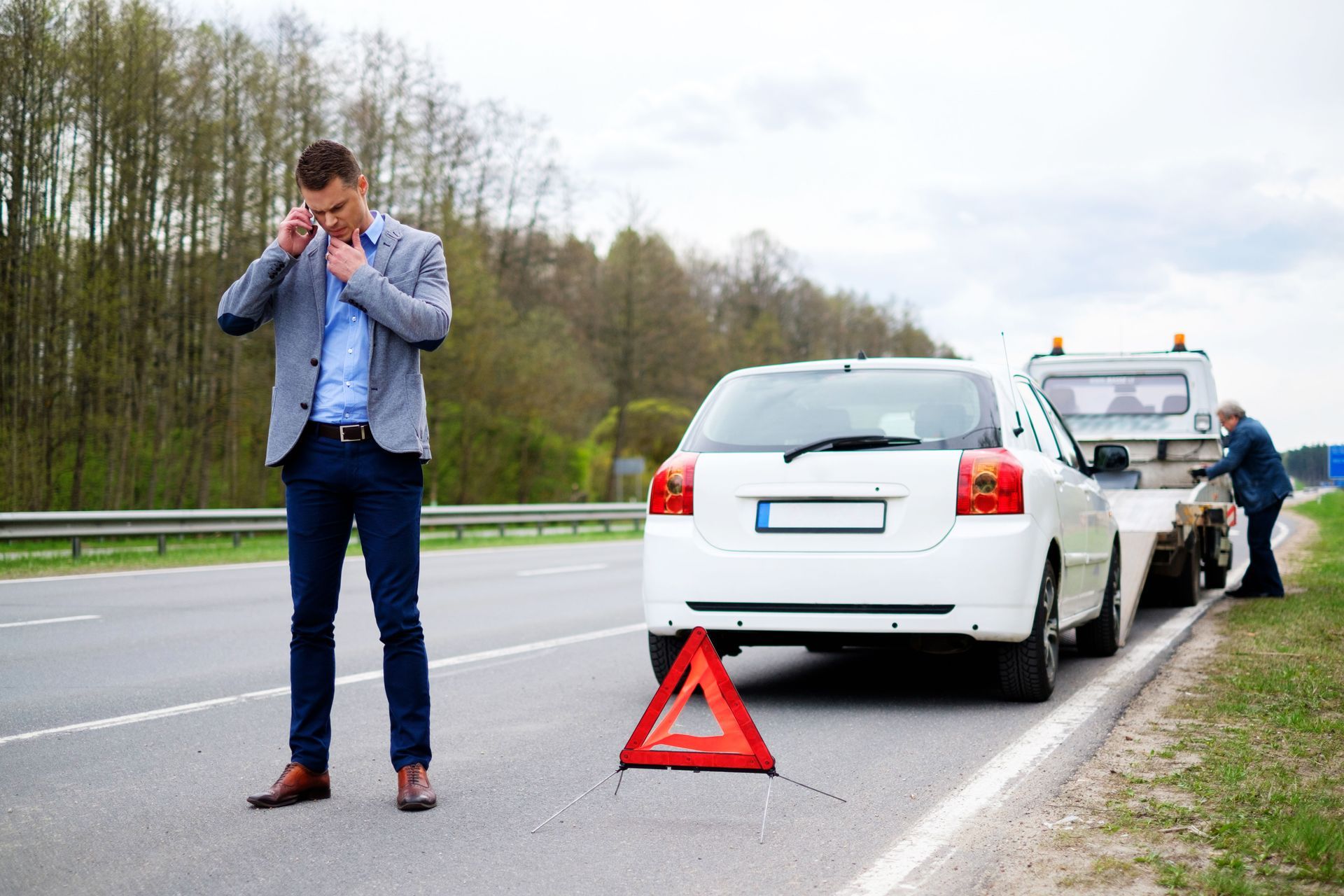
Once stopped, place the transmission in park and apply the parking brake. Keep the hazard lights activated. If your vehicle has reflective warning triangles, flares or another type of emergency warning device, you may be able to use them to make the vehicle more visible. Follow the manufacturer's instructions and avoid placing yourself in a dangerous position while deploying them.
Do not assume that moving onto the shoulder makes the situation completely safe. High-speed traffic can pass surprisingly close to a disabled vehicle, and distracted drivers may not notice it until the last moment. Remain alert and avoid standing between your vehicle and passing traffic.
When Should I Contact a Towing Company?
Once everyone is in a reasonably safe position, determine whether the vehicle can continue operating. Some breakdowns may involve a simple issue that can be resolved quickly, such as a flat tire or an empty fuel tank. Other problems require professional assistance, particularly when the vehicle cannot be driven safely.
If you are unsure whether the vehicle is safe to drive, contacting a towing company can be a prudent option. A tow can prevent you from attempting to operate a vehicle with a serious mechanical problem and potentially causing additional damage or creating a collision hazard.
You should also consider the location of the breakdown. A vehicle that stops on a busy interstate, at night or in severe weather can present significantly greater risks than one that breaks down in a well-lit parking lot. In those circumstances, getting professional assistance promptly may be especially important.
If you have roadside assistance through your insurance provider, automobile club or vehicle manufacturer, check whether towing is included. You may be able to request assistance through an existing service rather than arranging a separate provider. If you need to contact a towing company directly, use a reputable provider that can clearly explain its services and pricing.
What Essential Information Should I Provide to a Towing Company?
When you call a towing company, providing accurate information can help the dispatcher determine what type of assistance you need. Start with your exact location. If you are on a highway, provide the route number, direction of travel, nearest exit and mile marker if available. GPS coordinates or a location shared from your phone can also be helpful.
Explain what happened to the vehicle and whether it is completely disabled. For example, tell the dispatcher if the engine will not start, the vehicle has a flat tire, the car was involved in a collision or you suspect a mechanical failure. If you know the vehicle's make, model and approximate size, provide that information as well.
The dispatcher may also need to know whether the vehicle is accessible to a tow truck. A car parked in a driveway or parking lot can usually be approached differently from a vehicle stuck in a ditch or positioned in a difficult roadside location.
Tell the towing company how many people are with you if that information affects your transportation needs. It can also be useful to ask about the estimated arrival time, expected charges and accepted payment methods before service begins.
How Do I Communicate with Other Drivers on the Road?
Your vehicle's hazard lights are one of the simplest ways to communicate that you are experiencing a problem. Keep them on whenever the vehicle is stopped in a location where approaching drivers need additional warning.
If you must remain in or near the vehicle, stay aware of traffic and avoid unnecessary movement around the roadside. Do not wave other drivers around your vehicle unless there is an immediate reason to do so and you can do it safely. Passing drivers may not understand your intentions, and standing in traffic can put you at serious risk.
If another motorist stops to offer assistance, use good judgment. You are not obligated to accept help from a stranger, particularly if doing so would require you to leave a secure location. If you have already contacted a towing company, you can simply explain that assistance is on the way.
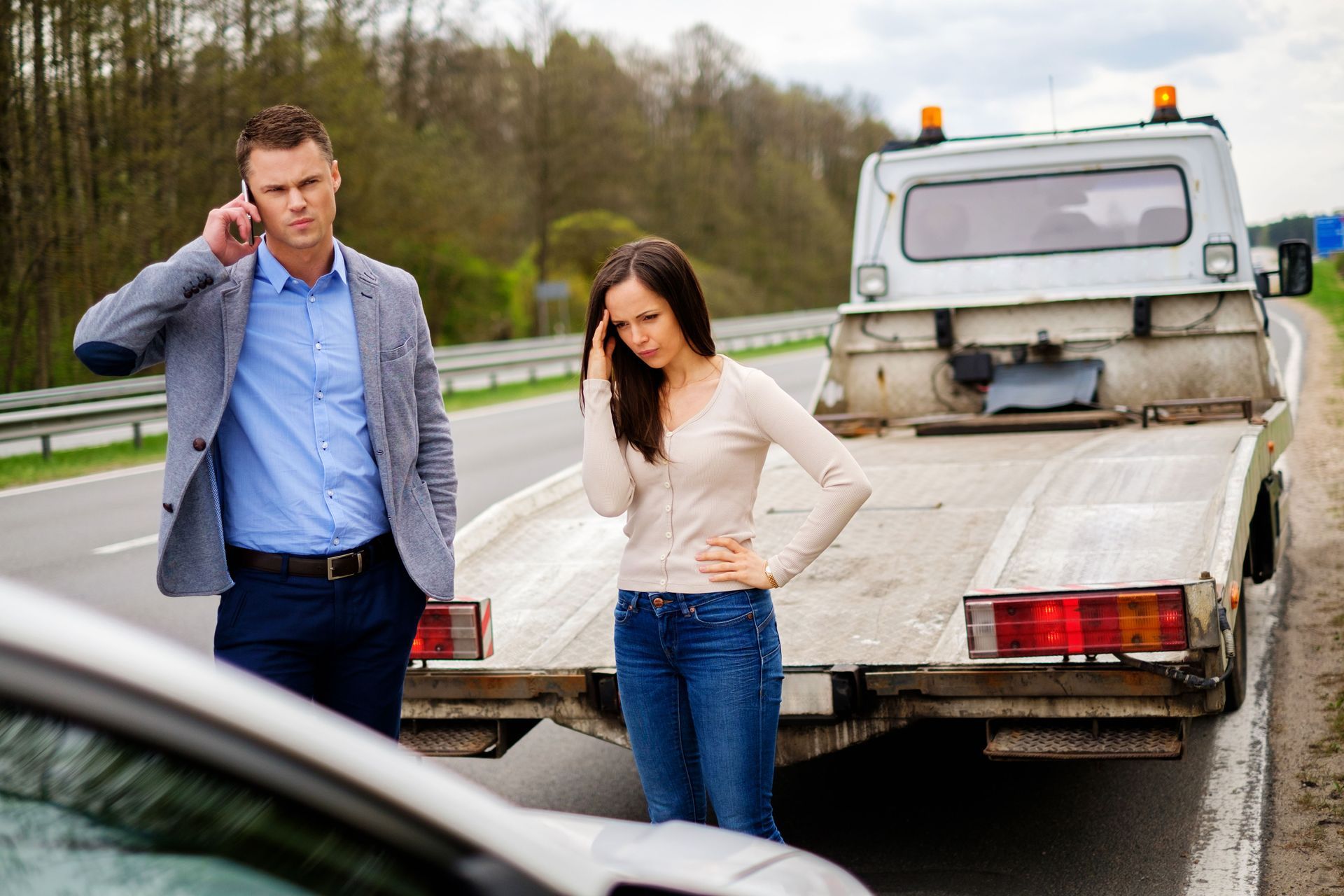
Once a tow truck arrives, follow the operator's instructions regarding where you and your passengers should stand. Stay clear of the vehicle while it is being positioned or loaded. Tow trucks require space to maneuver, and equipment such as winches and ramps can create hazards if people stand too close.
The first five minutes after a breakdown should focus less on diagnosing the vehicle and more on creating a safe situation. Turn on your hazard lights, move the vehicle away from traffic when it is safe and practical, and keep yourself and your passengers out of harm's way.
If the vehicle cannot safely continue, contacting a towing company can provide a practical way to get it off the road and transported to a repair facility or another suitable location. When calling, provide your precise location, vehicle information, and a clear description of the problem.
Most importantly, resist the urge to rush. A breakdown is inconvenient, but making a dangerous roadside maneuver can turn a mechanical problem into a much more serious incident. Staying calm, communicating clearly, and prioritizing safety can help you manage those critical first few minutes until professional assistance arrives. If you're in need of a tow, reach out to the team at Garrett’s Towing & Recovery, LLC today!